Why Töregene’s Past Changes Everything in Jaadugar
Jaadugar: A Witch in Mongolia Episode 6 shifts the story in a powerful new direction by revealing Töregene’s tragic past and showing how much history is buried...
- Written by
- OtakuNaija
- Published
- Jul 31, 2026
- Read time
- 10 min
- Views
- 69



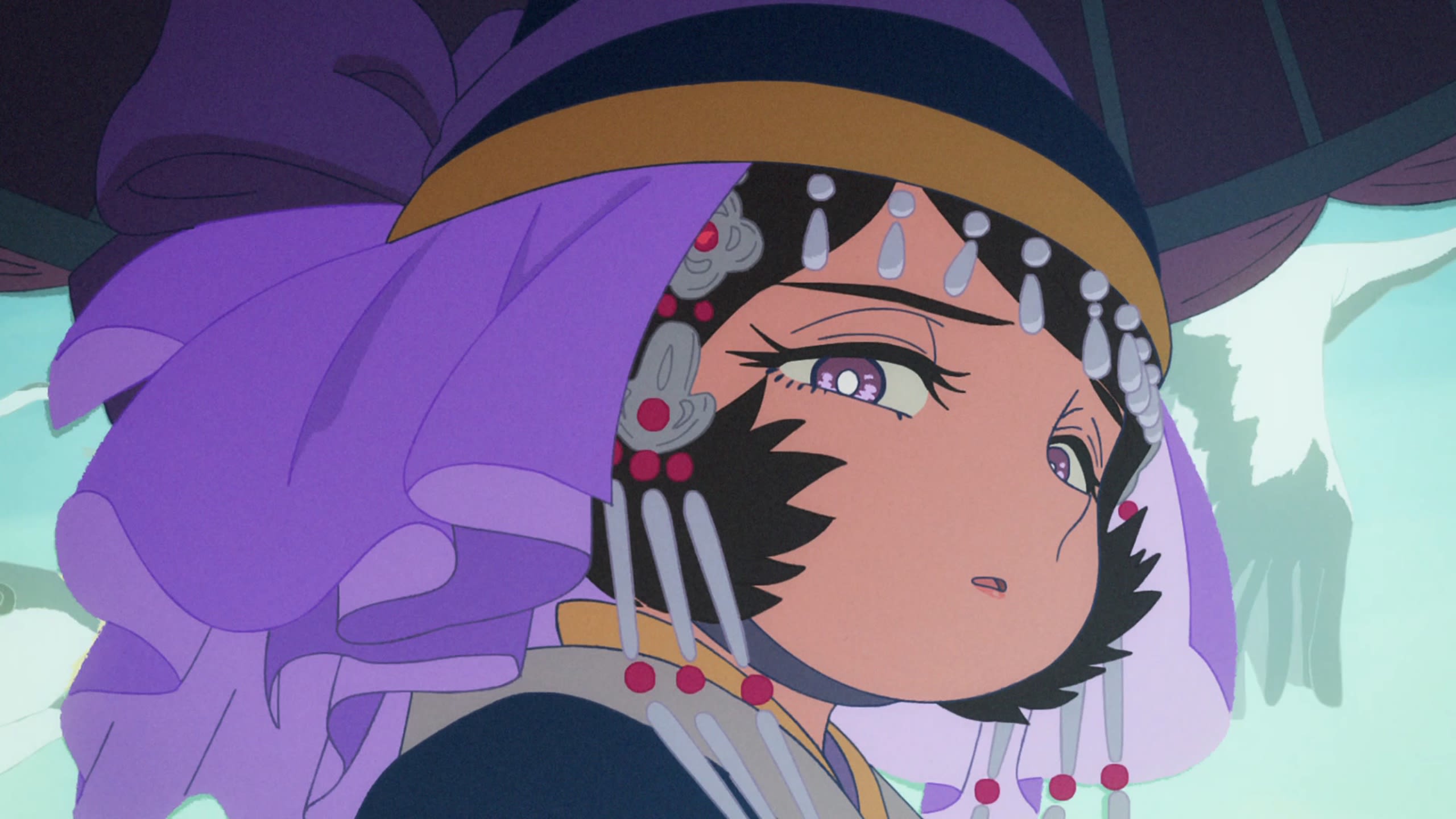
Sometimes a single conversation can change the entire way you see a character.
Jaadugar: A Witch in Mongolia has been one of the most quietly compelling anime of the season because it refuses to rush its emotional turns. Instead of relying on loud battles or flashy twists, it builds tension through history, memory, and the way people carry pain inside them.
That is why Episode 6 matters so much.
The official episode synopsis reveals that Töregene confides in Sitara and begins recounting her tragic past. The episode reaches back 25 years, to the time when Töregene married the much older Merkit chief Dayir and lived peacefully with the tribe, including Dayir’s daughter Khulan. That peace ends when the Mongols, led by Genghis Khan, attack and force Dayir into a terrible decision. 1
What makes this development so powerful is that it does not just add lore. It changes the emotional meaning of Töregene herself.
Until now, she could be read as a strong supporting figure in a larger historical story. After this episode, she becomes something more complicated: a woman whose anger, loyalty, and silence are shaped by surviving a world that keeps taking everything from her. 2
The Real Twist Is Not the Plot. It Is the Character.
A lot of anime twists are built on surprise reveals.
A hidden villain. A secret identity. A shocking betrayal.
Episode 6 of Jaadugar does something different.
Its twist is emotional, not just narrative.
The episode reveals that Töregene’s life is not defined by whatever role she seems to play in the present. It is defined by what happened years ago, when her family, her tribe, and her peace were broken by war. That means the audience is no longer watching her as a simple political or social figure. They are now watching a survivor. 3
That changes everything.
When a character’s past is this painful, every present-day action starts to look different:
- every pause feels heavier,
- every choice feels more deliberate,
- every line carries more regret,
- and every quiet scene starts to feel loaded with things unsaid.
That is why this episode matters.
It doesn’t just answer questions. It teaches you how to ask better ones.
Why Töregene Feels So Important Now
Töregene’s backstory makes her feel like one of the series’ most emotionally complex characters.
She is not introduced as a simple hero. She is not framed as a one-note victim. She is not treated like a prop for someone else’s journey.
Instead, she is presented as someone whose history is inseparable from the larger conflict around her. Her marriage to Dayir, her bond with his daughter Khulan, and the violence that followed all help explain why she exists in the story with such gravity. 4
That kind of writing is what makes historical anime so rewarding when it is done well.
A good historical story does not just place characters in the past. It shows how the past presses down on them.
Töregene is a great example of that.
Sitara’s Role Makes the Scene Even Stronger
The episode synopsis also matters because Töregene confides in Sitara, who herself “carries a grudge against the Mongol Empire.” 5
That is important.
A confession is more powerful when it is not delivered into a void.
Sitara is not a neutral listener. She is someone who understands resentment, loss, and the emotional aftermath of imperial violence. That means the conversation between the two characters becomes more than exposition. It becomes a meeting of pain.
And that is where Jaadugar keeps standing out.
It understands that historical stories become more powerful when the characters do not just speak at each other. They recognize something in each other.
Why This Feels So Different From a Typical Fantasy Anime
One reason Jaadugar keeps getting attention is that it does not behave like a conventional fantasy anime.
The story is set in 13th-century Persia and Mongolia, and the official material describes Sitara as a slave who is taken in by a family, then later separated from them by violence and politics. The show is built around identity, oppression, knowledge, and survival rather than around easy power fantasies. 6
That is a huge part of its appeal.
A lot of fantasy anime tell you who to root for immediately.
Jaadugar asks you to sit inside a much messier world.
It does not flatten its characters into heroes and villains. It lets them be shaped by history.
And that is exactly why Töregene’s past hits so hard.
Science Saru’s Care Shows in Moments Like This
Part of what makes the episode feel meaningful is the care behind the adaptation itself.
In the Cartoon Brew interview, Naoko Yamada and Abel Góngora explained that the team wanted to be very respectful culturally while adapting the manga’s Persian and Mongolian setting. Góngora said they studied the cities and landscapes carefully and worked with a cultural consultant, while Yamada described visiting a mosque in Tokyo and speaking with people performing salat to better understand the setting. 7
That matters because a story like Jaadugar only works if the world feels real enough to carry the emotions.
If the setting feels careless, the characters lose weight. If the setting feels authentic, the characters gain depth.
This is one of those anime where the research behind the animation is part of the viewing experience.
Why the Episode 6 Setup Matters for the Bigger Story
Episode 6 does not feel like a side chapter.
It feels like a hinge point.
By revealing Töregene’s past, the story gives viewers a new lens through which to understand the people around Sitara. It also reinforces one of the anime’s core ideas: that history is not dead. It is active. It keeps living inside the people who survived it. 8
That is why the episode feels so effective.
It is not saying, “Here is a sad backstory.” It is saying, “Now that you know this, watch the present differently.”
That is a much stronger kind of storytelling.
The Strength of a Slow Burn
Jaadugar has been effective precisely because it does not force emotion.
It lets tension accumulate.
It lets cultural context breathe.
It lets the audience sit with conversations that do not instantly resolve themselves.
That style may be quieter than most anime fans are used to, but it can be incredibly powerful when the payoffs arrive.
Episode 6 is one of those payoffs.
Töregene’s story does not just expand the world. It gives the world more emotional memory.
And in a historical anime, memory is everything.
What Fans Should Watch for Next
Now that Töregene’s past is on the table, the next question is what this means for her relationship with Sitara and the wider power struggle around them.
The episode synopsis suggests a difficult choice already made in the past. That kind of detail usually means the present-day consequences will continue unfolding for several episodes. 9
So the most interesting things to watch now are:
- whether Töregene and Sitara’s bond deepens,
- whether the audience’s understanding of the Mongol conflict changes,
- and how the show uses this backstory to shape future political and emotional turns.
That is where Jaadugar becomes more than a well-made historical anime.
It becomes a story with real consequence.
OtakuNaija’s Take
This is the kind of episode that can quietly change how people talk about a series.
Not because it is loud. Not because it is shocking. But because it gives a character real depth at exactly the right moment.
Töregene’s past makes her feel alive. Sitara’s reaction gives the scene emotional weight. And the show’s carefully researched historical framing makes the whole thing land harder than it would in a less thoughtful anime. 10
If you are the kind of anime fan who likes character-driven twists more than simple spectacle, Jaadugar is absolutely worth following.
Watch the Latest Anime Episodes on OtakuNaija
While you wait for more Jaadugar updates, do not miss the latest anime episodes available on OtakuNaija.
Whether you're following One Piece, Dandadan, Sakamoto Days, Kaiju No. 8, The Rising of the Shield Hero, or other seasonal hits, visit our Episodes page and start watching today.
Visit the Episodes PageOtakuNaija brings you anime news, episode updates, release schedules, reviews, and everything happening across the anime world.
Final Thoughts
Jaadugar: A Witch in Mongolia continues to prove that anime can be powerful without relying on the usual formula.
Episode 6 is not just a flashback episode. It is a character-defining chapter that changes how Töregene and Sitara feel within the story’s larger historical conflict. The result is a richer, more emotionally layered anime that rewards viewers who pay attention. 11
That is what makes this series special.
It respects its setting. It respects its characters. And it trusts the audience to sit with its history.
Stay tuned to OtakuNaija for more anime analysis, episode reactions, and fresh features from the world of anime.
Get weekly anime drops, straight to your inbox.
New episodes, reviews, and recommendations every Sunday. No spam.
Related articles
 Guides
Umayuru Gets a New Anime This September
Unlike the more dramatic storytelling of Umamusume: Cinderella Gray, Umayuru Full Gate! will take a much more playful approach.
 Guides
LV999 no Murabito Leads ABEMA's Summer 2026 Anime Ranking
ABEMA has revealed its mid-season Summer 2026 anime rankings, and LV999 no Murabito currently leads the playback chart while Mushoku Tensei III dominates the comments ranking.
 Guides
5 Anime Worth Watching Today, August 24
Monday's anime lineup has several strong choices, from the latest Skeleton Knight and Grand Blue Dreaming to a new romance and fantasy releases. Here are five worth checking out.