The Dragon's Roar: How China's Animation Industry Is Reshaping the Global Landscape
With box office hits like The Ribbon Hero and All Wishes Come True dominating screens worldwide, 2026 marks a pivotal moment where Chinese animation is no longe...
- Written by
- OtakuNaija
- Published
- Aug 1, 2026
- Read time
- 9 min
- Views
- 21



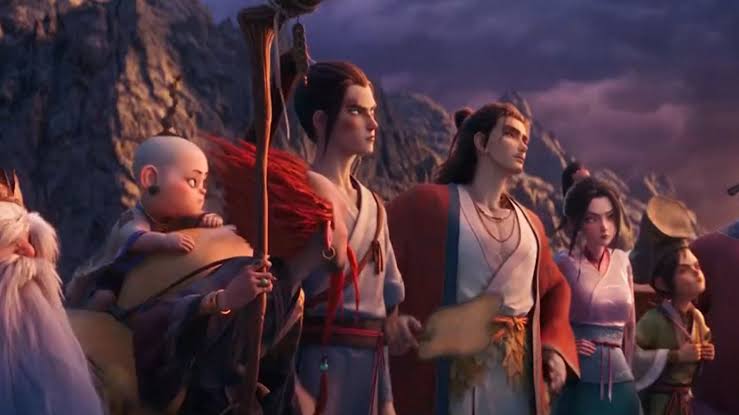
The summer of 2026 will be remembered as the season when Chinese animation truly arrived on the global stage. While the anime industry continues to dominate conversations about Japanese animation, a parallel revolution has been unfolding in China — one that is now impossible to ignore. From the mythological spectacle of All Wishes Come True (known domestically as Ba Xian! or The Eight Immortals) to the Tezuka-inspired The Ribbon Hero, Chinese animation is no longer content with domestic dominance. It is reaching across oceans and challenging the established order of global animation.
This is not a story about a single breakout hit. It is about an industry that has spent years building infrastructure, talent pipelines, and creative confidence. And in 2026, that investment is paying off in ways that are reshaping how the world consumes animated storytelling.
Stop scrolling — spoiler warning. If you have not been keeping up with the latest developments, the internet is already buzzing with discussions about these groundbreaking releases. You need to experience these in their full glory. Click the button below and start watching on OtakuNaija:
Watch the Latest Anime on OtakuNaija Episodes →
The Numbers That Demand Attention
The scale of China's animation success in 2026 is staggering. By mid-July, the summer box office had already surpassed 3.88 billion yuan (approximately $530 million USD), with animated films serving as the primary engine driving this growth[reference:0]. All Wishes Come True alone had accumulated over 379 million yuan (approximately $52 million USD) by July 22, with projections suggesting it could ultimately exceed 1.8 billion yuan ($250 million USD)[reference:1][reference:2]. The film opened to a remarkable 8.3 rating on Douban, China's equivalent of Rotten Tomatoes, placing it firmly among the highest-rated Chinese animated films in history[reference:3].
These numbers are not anomalies. They are the result of years of deliberate investment, technological advancement, and creative evolution. The Chinese animation industry has been building toward this moment since the breakthrough success of Ne Zha in 2019, which grossed over $700 million worldwide. What was once dismissed as a one-off phenomenon has proven to be the beginning of a sustained movement.
Beyond the Numbers: The Creative Revolution
What makes this moment genuinely significant is not just the box office totals but the creative ambition on display. All Wishes Come True represents a sophisticated reimagining of one of China's most beloved mythological traditions. The Eight Immortals — figures who have appeared in Chinese folklore for over a thousand years — are reimagined not as celestial beings with divine powers but as ordinary people with flaws, doubts, and relatable struggles[reference:4].
Director and screenwriter Mou Zhengyang made a deliberate choice to age the characters down and present them as mortals, a decision that fundamentally reframes the story[reference:5]. As he explained, the eight protagonists do not possess the kind of effortless success that often characterizes mythological heroes. Instead, they are "flawed, vulnerable, and ordinary people" whose courage emerges precisely because of their ordinariness[reference:6]. The narrative asks a compelling question: how do you bring together eight deeply imperfect individuals with their own agendas and transform them into legendary figures worthy of being remembered for millennia?
This approach represents a significant departure from the traditional "chosen one" narrative that has dominated not just Chinese mythology but global fantasy storytelling for decades. It reflects a broader trend in contemporary animation toward more grounded, character-driven storytelling that prioritizes emotional resonance over spectacle.
The visual language of All Wishes Come True is equally ambitious. The film draws directly from classical Chinese painting, employing the blue-green landscape style (qinglü shanshui) that has been a hallmark of Chinese art for centuries[reference:7]. The creators consulted ancient texts and paintings to ensure authenticity in their depiction of the mythical Penglai仙境, the legendary island of the immortals[reference:8]. The result is a visual experience that feels simultaneously ancient and contemporary, rooted in tradition yet entirely fresh.
The Globalization Strategy: "All Wishes Come True"
Perhaps the most telling indicator of China's global ambitions is the decision to release All Wishes Come True under an English title that bears no direct translation of "Eight Immortals." The international title, All Wishes Come True, was chosen specifically to make the film's themes accessible to global audiences unfamiliar with Chinese mythology[reference:9].
This is not a retreat from cultural identity but a sophisticated strategy for cultural export. The film retains its Chinese soul while adopting packaging that invites international audiences in. The international release schedule reflects this ambition: Australia, New Zealand, and Papua New Guinea on August 13; North America, the United Kingdom, Ireland, and the Netherlands on August 14; and Belgium and Luxembourg on September 4[reference:10][reference:11].
The marketing strategy has been equally sophisticated. The film's distributors employed a layered approach to building buzz, with screenings targeted at different audiences — media critics, traditional culture enthusiasts, and university students — before the general release[reference:12]. This allowed word-of-mouth to build across multiple communities simultaneously. Interactive elements, including blind box promotions and collaborations with regional artisans creating traditional crafts like Shu embroidery and bamboo weaving, further deepened audience engagement[reference:13].
The result has been unusually broad demographic appeal. Market data shows that the film performed exceptionally well in both fourth-tier and second-tier cities, with audience age distribution spanning generations[reference:14]. This is not a film that appeals only to young urbanites or only to traditional culture enthusiasts. It has found a genuinely broad audience.
The AI Factor: A Tool, Not a Replacement
While China's animation industry has embraced technological innovation, the approach to artificial intelligence has been notably different from the controversial implementations seen in other markets. Rather than using AI to replace human creativity, Chinese studios have integrated AI as a tool to enhance efficiency without sacrificing artistic integrity.
The broader animation industry is experiencing what experts describe as a "deep transformation and upgrading" at the intersection of technology and content[reference:15]. After surpassing 25 billion yuan in box office revenue in 2025, the market has shown signs of diversification[reference:16]. The challenge for the industry is to balance technological adoption with content quality and market expansion[reference:17].
This stands in stark contrast to the controversies that have plagued other markets. The recent debacle with Amazon Prime Video's AI-generated English dubs for Banana Fish and other anime titles serves as a cautionary tale[reference:18]. Those dubs were removed in December after widespread backlash from fans and industry professionals alike[reference:19]. In China, the approach has been more measured — using AI to streamline production processes while keeping creative decisions firmly in human hands.
The Cultural Significance: Beyond Entertainment
The success of films like All Wishes Come True carries implications that extend far beyond the entertainment industry. These films represent a form of cultural soft power that operates through genuine appeal rather than explicit messaging.
As one commentator observed, what truly resonates with audiences is not merely sophisticated visual effects but "the deep alignment between traditional cultural cores and contemporary popular emotions"[reference:20]. The creators are not simply reproducing ancient stories but are finding ways to make them speak to modern audiences. The themes of All Wishes Come True — ordinary people achieving extraordinary things through mutual support and perseverance — have universal appeal that transcends cultural boundaries.
The film's depiction of Penglai draws directly from ancient texts, with the filmmakers choosing to "restore the imagination of the ancients" rather than impose modern interpretations[reference:21]. This commitment to authenticity, combined with contemporary storytelling techniques, creates a bridge between past and present that feels organic rather than forced.
The Competitive Landscape: China vs. Japan vs. Hollywood
The rise of Chinese animation is occurring against a backdrop of intensifying global competition. The summer 2026 season has seen an unprecedented convergence of animated content from multiple traditions. Japanese anime continues to dominate streaming platforms, with major releases like The Ribbon Hero from Netflix and Twin Engine representing a reimagining of Osamu Tezuka's Princess Knight[reference:22]. Hollywood, meanwhile, continues to produce its own animated features.
What makes the Chinese entry into this competition noteworthy is the speed of its ascent. In less than a decade, China has gone from being a minor player in global animation to a major force. The industry has developed its own production infrastructure, cultivated its own talent, and established its own aesthetic identity. It no longer needs to imitate Japanese or Western models to succeed.
The international release of All Wishes Come True represents a significant test of this new confidence. If the film performs well in markets like North America and Europe, it will validate the strategy of cultural export through authentic storytelling rather than cultural dilution.
What This Means for the Future of Animation
The implications of China's animation renaissance extend beyond the immediate success of individual films. They suggest a fundamental reshaping of the global animation landscape.
First, the dominance of Japanese anime as the primary non-Western animation tradition is no longer unchallenged. Chinese animation offers an alternative aesthetic and narrative tradition that is increasingly competitive in quality and appeal. This is not about replacement but about diversification — a global animation ecosystem that includes multiple distinct traditions.
Second, the success of these films demonstrates that there is a global audience for stories rooted in specific cultural traditions, provided they are told with sufficient craft and emotional authenticity. The old assumption that only Western or Westernized stories could achieve global success is being proven false.
Third, the Chinese approach to technology and tradition offers a potential model for other animation industries. The integration of AI as a productivity tool rather than a creative replacement, combined with a commitment to cultural authenticity, suggests a path forward that avoids some of the pitfalls seen in other markets.
Join the Conversation Before the Month Ends
All Wishes Come True arrives in international theaters this August, bringing with it the full force of China's animation renaissance. Whether you are a longtime fan of Chinese animation or a newcomer curious about what all the excitement is about, this is a moment worth paying attention to.
Do not wait for the hype to die down. The community discussions, cultural exchanges, and shared excitement are all part of the experience.
Stay ahead of the curve by watching the latest episodes on OtakuNaija:
Watch the Latest Anime on OtakuNaija Episodes →
Final Thoughts
The summer of 2026 will be remembered as a turning point. Chinese animation has arrived on the global stage not as a curiosity or a novelty but as a legitimate creative force capable of competing with the best the world has to offer.
All Wishes Come True is the current standard-bearer, but it is far from the only example. The industry that produced it is building infrastructure, developing talent, and creating content at a scale and quality that demands attention. The dragon is roaring, and the world is finally listening.
Sound Off in the Comments
What do you think about the rise of Chinese animation? Are you planning to watch All Wishes Come True when it arrives in your region? How do you think Chinese animation compares to Japanese anime and Western animation?
Let us know in the comments below.
Get weekly anime drops, straight to your inbox.
New episodes, reviews, and recommendations every Sunday. No spam.
Related articles
 Action
Pan Dorobo Reveals New Cast
Pan Dorobo has unveiled a new trailer, key visual and two additional cast members ahead of its October premiere.
 Action
Shangri-La Frontier Season 3 Gets Date
Shangri-La Frontier Season 3 now has an official premiere date, with the next chapter of Sunraku's VR adventure arriving in January 2027.
 Action
Witch and Mercenary Sets 2027 Premiere
The upcoming Witch and Mercenary anime has revealed its April 2027 premiere alongside a new trailer and fresh visuals.